First Time in Dallas? Here's Your Art Scene Cheat Sheet
Dallas art neighborhoods: the Arts District, Design District, and Deep Ellum. Three scenes, one guide.
By RedDot Texas
Michael Barera · CC BY-SA 4.0
Dallas generated $1.27 billion in arts sales in recent years, making it one of the most significant art markets in the American South. But what makes Dallas genuinely interesting for first-time visitors is not the money — it is the geography. The city's art scene is organized around three distinct neighborhoods, each with its own character, its own galleries, and its own relationship to the broader art world. Understanding those neighborhoods is the key to understanding Dallas art. Here is your cheat sheet.
## The Arts District
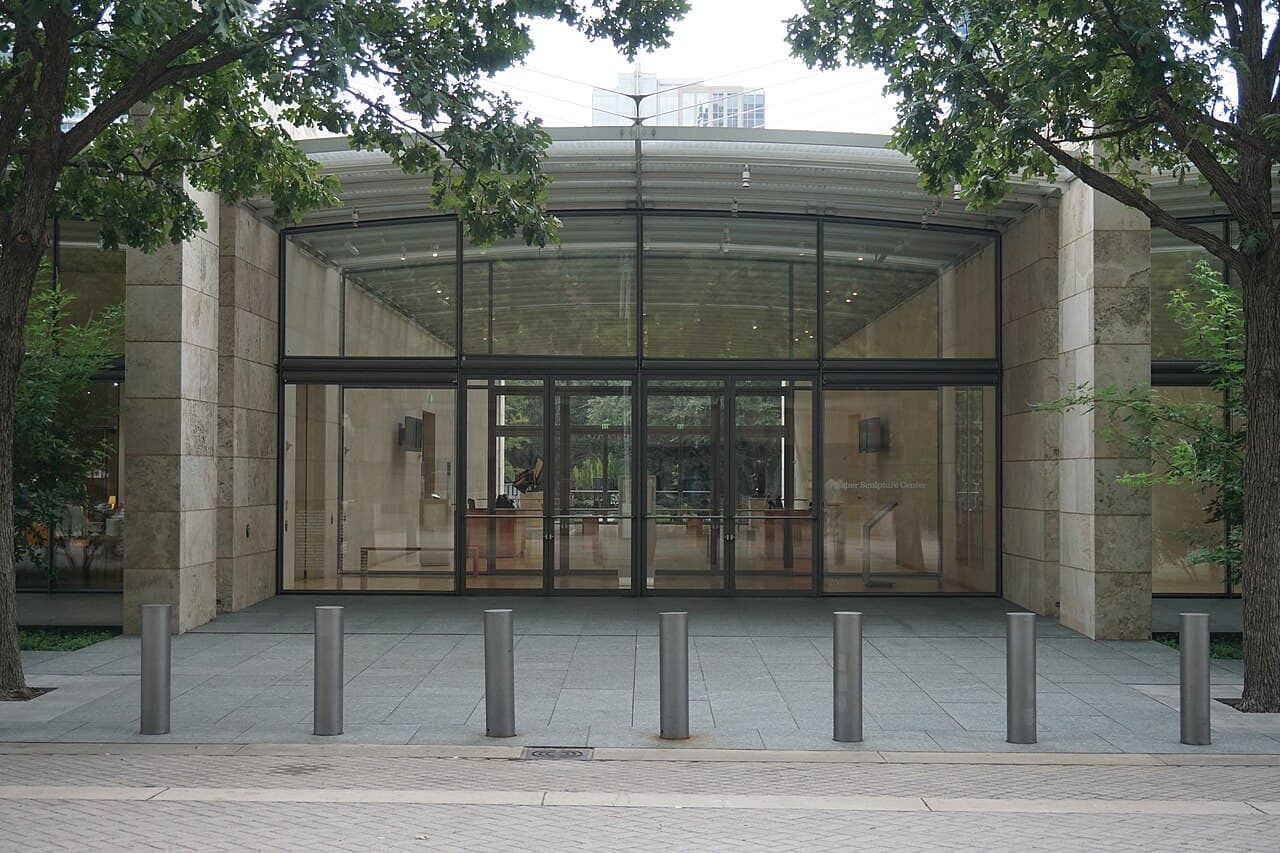
The Dallas Arts District is the largest contiguous urban arts district in the country — 68 acres of museums, performance venues, and public art in the heart of downtown. The anchor institutions are world-class. The Dallas Museum of Art (DMA) is always free for general admission and holds a collection of over 25,000 works spanning 5,000 years. The museum's strength in contemporary art, Latin American art, and decorative arts makes it one of the most important museums in the Southwest. The Nasher Sculpture Center (Nasher), designed by Renzo Piano, houses one of the finest collections of modern and contemporary sculpture in the world — the garden alone, with works by Richard Serra, Mark di Suvero, and James Turrell, is worth the trip. The Crow Museum of Asian Art is always free and holds a collection of Asian art that rivals institutions in cities three times Dallas's size. Currently on view: Nic Nicosia retrospective at the Nasher (through August 16) and Lichtenstein exhibitions at both the DMA and Nasher (through August 16 at Nasher, through July 5 at DMA).
## The Design District
The Design District is where Dallas's commercial gallery scene lives. The neighborhood — originally a hub for furniture showrooms and interior design businesses — has become the city's gallery row over the past decade, with a concentration of serious contemporary galleries that rivals any neighborhood in the state. Conduit Gallery shows ambitious, intellectually rigorous work. Barry Whistler Gallery is one of the most respected galleries in Texas, with a four-decade track record of identifying important artists early. Liliana Bloch Gallery focuses on emerging and mid-career contemporary artists with a program that favors conceptual rigor and material experimentation. And [Dallas Contemporary](/dallas/galleries/dallas-contemporary) — technically a museum, not a gallery, but located in the Design District — is one of the most adventurous exhibition spaces in the state. Currently: Francisco Moreno, *Historia Sintetica* (through August 30), the artist's first solo museum show, an immersive installation exploring colonialism, migration, and cultural hybridity.
## Deep Ellum
Deep Ellum is Dallas's street art capital. The neighborhood — historically the center of the city's music and nightlife scene — is home to over 130 murals covering building facades, alleyways, parking structures, and every available surface. The murals range from commissioned works by nationally recognized artists to grassroots pieces that appear overnight and disappear just as quickly. Walking through Deep Ellum is like walking through an open-air gallery that is constantly being repainted. The annual Deep Ellum Arts Festival draws thousands of visitors and brings the neighborhood's creative energy into sharp focus. Even on a regular afternoon, the streets reward exploration — bring a camera and comfortable shoes.
## What's On View Right Now
The current exhibition calendar is unusually strong. Nic Nicosia at the Nasher (through August 16) is a career retrospective of the Dallas-based artist whose staged photographs and film work have influenced a generation of Texas artists. Lichtenstein is showing at both the Nasher (through August 16) and the DMA, creating a rare opportunity to see one artist's work in two major institutions simultaneously. Francisco Moreno at Dallas Contemporary (through August 30) is the exhibition that the Texas art world has been talking about all summer. And the Dallas Contemporary Summer Series adds live music, yoga, artist markets, and tattoo pop-ups to the mix throughout the summer months.
## Free Options
Dallas is exceptionally generous with free art. The DMA is always free for general admission — no tickets, no suggested donation, just walk in. The Crow Museum of Asian Art is always free. Dallas Contemporary is free through 2026. Between these three institutions, you can spend an entire day immersed in world-class art without spending a dollar. This is not a compromise — the DMA alone holds a collection that justifies a full day's visit.
## When to Go
The Design District comes alive on first Saturdays, when galleries coordinate openings and the neighborhood fills with collectors, artists, and curious visitors making the rounds. It is the best way to experience the gallery scene in a single evening. Thursday evenings at the DMA offer late hours and programming that attracts a younger, more social crowd. For Deep Ellum, any afternoon works — but weekend evenings bring the murals to life with foot traffic, live music, and the energy that makes the neighborhood what it is.
## Getting Around
The Arts District is entirely walkable — the DMA, Nasher, and Crow Museum are all within a few blocks of each other, and the DART rail has a stop right in the district. The Design District requires a car or rideshare — the galleries are spread across several blocks and the neighborhood is not well-served by public transit. Deep Ellum is walkable from downtown and accessible via DART. If you are planning to hit all three neighborhoods in one day, budget for a rideshare between them — they are close but not walking distance from each other.
For the complete list of what's happening this month, check all Dallas events. For detailed gallery profiles and visitor information, browse Dallas galleries.