Art Censorship in Texas: I.C.E. Pops at UNT
UNT shut down Marka27's show in days. Then graduating seniors boycotted their own exhibition in protest.
By RedDot Texas
Hourick · CC BY 3.0
Victor "Marka27" Quiñonez was born in Ciudad Juárez and raised in East Dallas. His artistic practice sits at the intersection of street art, sculpture, and cultural commentary — work that draws on his lived experience as a Mexican-American navigating identity, borders, and belonging. For over two decades, he has built a body of work that addresses the U.S. Latino experience with sharp wit, visual sophistication, and an unflinching willingness to confront uncomfortable truths. His work has shown in galleries and museums across the country. He is not an unknown provocateur. He is a serious artist with a serious career.
The centerpiece of his recent work is the "I.C.E. Scream" series — a collection of popsicle sculptures that look, at first glance, like playful pop art objects. Look closer and the content becomes unmistakable. The popsicles contain handcuffs, replica firearms, and old rosaries encapsulated inside translucent resin, frozen in place like artifacts preserved in ice. The popsicle sticks feature a parody of the ICE seal that reads "U.S. Inhumane and Cruelty Enforcement." The work is simultaneously beautiful and brutal — candy-colored objects that contain instruments of state violence and symbols of faith, fused together in a form that evokes childhood innocence. It is exactly the kind of art that makes you stop, look again, and reconsider what you thought you were seeing.
The exhibition opened at the University of North Texas on February 3, 2026. Within days, it was shut down. University administrators, responding to the political climate created by Trump administration executive orders targeting higher education, made the decision to close the show. The stated concerns were vague — questions about what art "can" and "should" be shown on a public university campus — but the subtext was clear. Art that directly critiques federal immigration enforcement was deemed too risky to display at an institution dependent on federal funding. The closure was not the result of public outcry or student complaints. It was a preemptive act of institutional self-censorship.
The UNT arts faculty responded with an open letter protesting the closure. The letter was articulate, principled, and forceful in its defense of artistic freedom and the university's obligation to support challenging work. But there was one notable detail: none of the faculty signed their names. The letter was issued anonymously, a collective statement from professors who believed strongly enough in the principle to write about it but were afraid enough of retaliation to withhold their identities. That unsigned letter may be the most telling artifact of this entire episode — it reveals the depth of the chill that has settled over Texas higher education.
The students went further. Graduating seniors in the UNT art program boycotted their own traditional campus graduation exhibition. Rather than show their thesis work in a university gallery that had just demonstrated its willingness to censor art under political pressure, the students organized alternative exhibitions at independent venues across Denton and Dallas. They chose to show their work in spaces where the content would not be subject to administrative approval — spaces that operated on the principle that art should be seen, not screened. The boycott was not a tantrum. It was a coherent, organized act of solidarity with a fellow artist and a statement about the conditions under which they were willing to present their work.
The "I.C.E. Scream" series will not stay hidden. The work is scheduled to go on exhibition at the University of California, Santa Cruz in September 2026 — a reminder that what Texas institutions are unwilling to show, others are eager to present. The migration of the work from a Texas university to a California one is itself a kind of commentary that Quiñonez could not have planned but that perfectly illustrates the dynamics his art addresses.
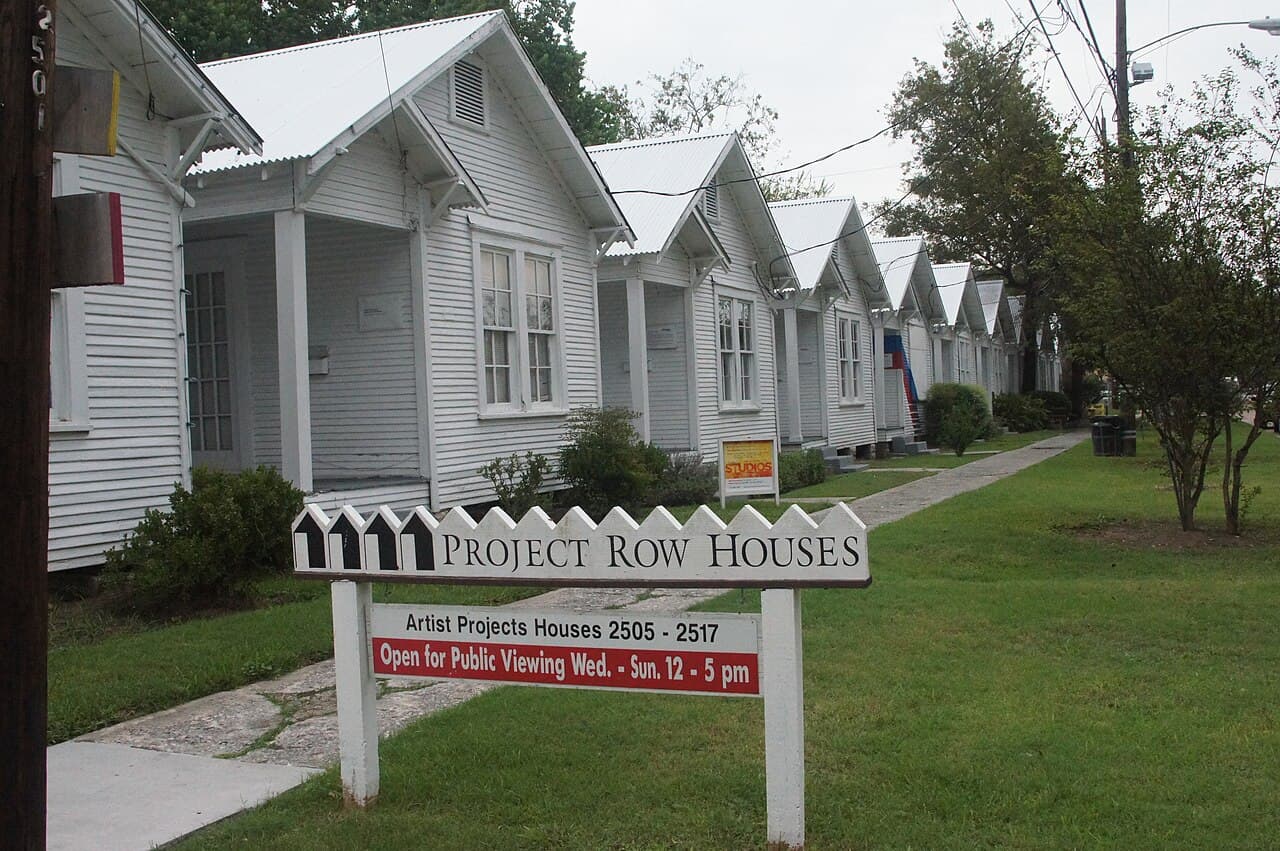
What does this mean for Texas art? The tension between institutional support and political pressure is not new, but the current intensity is. Texas has always been a place where art pushes boundaries — from the Menil Collection's founding commitment to free expression, to Project Row Houses' decades of community activism through art, to the border art movements that have flourished in the Rio Grande Valley. The state's art history is inseparable from its political tensions. But there is a difference between art existing in tension with power and art being silenced by institutions that are supposed to protect it.
The broader pattern of art censorship nationally adds context to the UNT incident. Libraries are pulling books, school districts are banning curricula, and universities are recalculating what they can afford to support. The arts, always vulnerable to political pressure because they depend on institutional and governmental support, are experiencing a contraction of the space available for challenging work. What happened at UNT is not an isolated incident — it is a local expression of a national trend.
Why does this matter for anyone who cares about Texas art? Because the health of an art scene is not measured only by gallery sales and museum attendance. It is measured by the willingness of institutions to support work that is difficult, confrontational, and politically charged. The moment institutions begin curating based on political risk rather than artistic merit, the ecosystem that produces great art begins to erode. Artists who cannot show challenging work at universities will not stop making it — but they may stop making it in Texas.
Art's power is precisely that it can make us uncomfortable. A popsicle with handcuffs inside it is not dangerous. It is a sculpture. But the fact that it was deemed too risky to display on a university campus tells us something important about the current moment — and about the work that still needs to be done, both in art and in the culture that surrounds it. Victor Quiñonez made art that did exactly what art is supposed to do. The institutions failed. The students did not.