Review: Nic Nicosia — Everyday Surreal at the Nasher
Nic Nicosia's five-decade survey at the Nasher: Dallas's most important living artist, finally assessed.
By RedDot Texas
Michael Barera · CC BY-SA 4.0
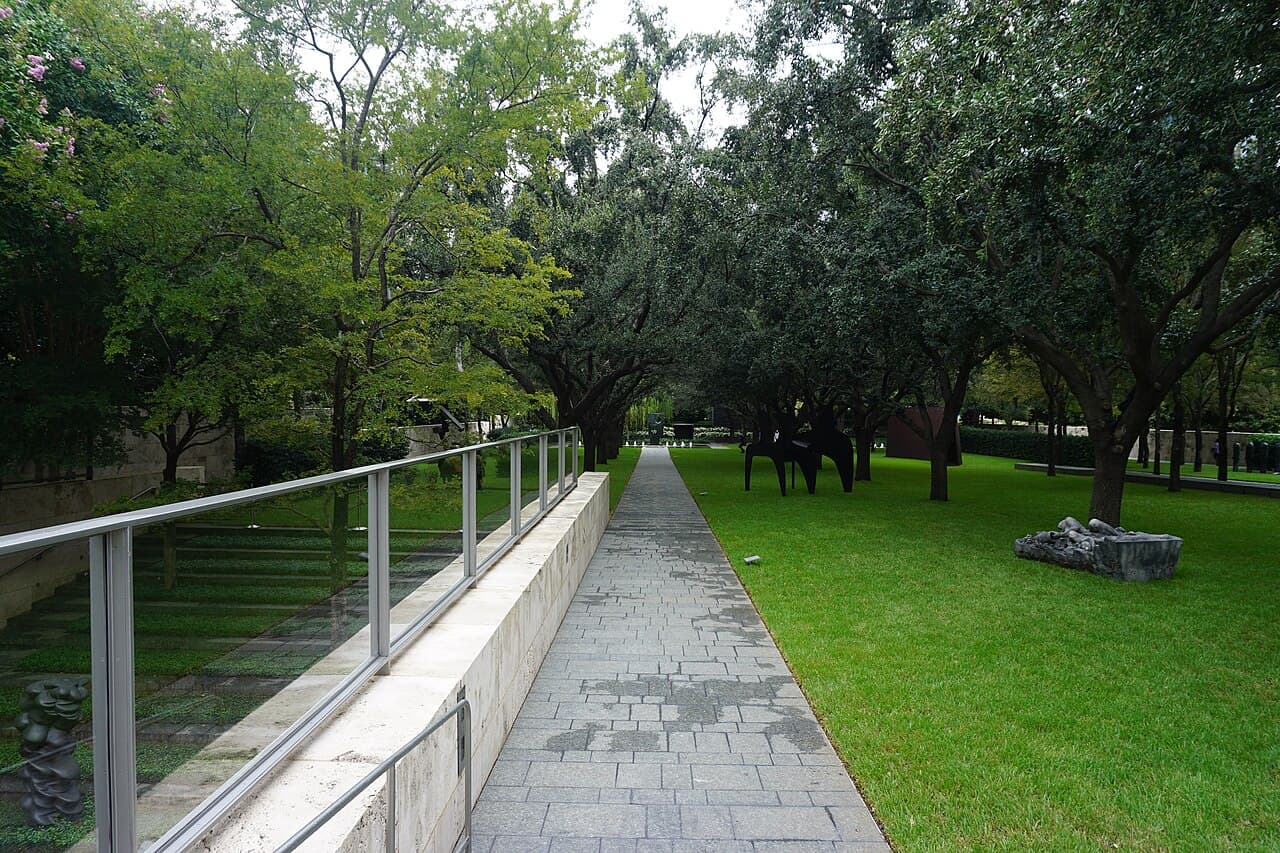
Nic Nicosia: Everyday Surreal at the Nasher Sculpture Center is the exhibition Dallas has owed this artist for more than two decades. Seventy works spanning 25 years fill the Renzo Piano-designed galleries — the largest showing of Nicosia's work since his 1999/2000 survey, and a long-overdue reckoning with one of the most inventive and underrecognized artists working in American photography and sculpture today.
The early work is where Nicosia's reputation was built. In the 1980s and 1990s, he was a pioneer of staged photography — constructing elaborate sets with casts of actors, crews, and meticulously designed environments to create photographs that looked like stills from films that never existed. These were not documentary images or found moments. They were entirely fabricated realities, built from scratch in studios and on location, photographed with the precision of a cinematographer, and presented as single images that contained entire narratives. The ambition was staggering, and the results were unlike anything else being made in American photography at the time.
The most revealing aspect of this survey is the shift. At some point — and the exhibition traces this transition with care — Nicosia moved away from the elaborate productions. The casts disappeared. The crews went home. The sets were dismantled. What emerged was a solitary studio practice: drawings, sculptures, photographs made alone, in quiet, with materials close at hand. The shift was not a retreat. It was a deepening — a move from external spectacle to internal investigation, from the theatrical to the contemplative. The later work is smaller, quieter, and in many ways more powerful than the staged extravaganzas that made his name.
Renzo Piano's building is the ideal container for this work. The Nasher's light-filled galleries — with their trademark diffused natural light filtering through the ceiling — give the photographs and sculptures room to breathe while providing the kind of even, generous illumination that rewards close looking. The intimate scale of the later work benefits particularly from the Nasher's proportions: these are galleries designed for sculpture, and Nicosia's three-dimensional pieces feel completely at home here.
The work now is characterized by a buoyant whimsy combined with genuine philosophical inquiry. Nicosia makes objects and images that are playful, strange, and formally inventive — but underneath the lightness there are serious questions about time, memory, perception, and the nature of everyday reality. A drawing that looks like a casual doodle reveals, on closer inspection, a sophisticated meditation on space and form. A sculpture assembled from found objects carries the weight of accumulated experience. The whimsy is not superficial — it is the surface expression of a deep and restless intelligence.
Nicosia's Dallas roots matter. He was born here, built his career here, and has remained here through decades when the art world's attention was focused elsewhere. Dallas is not a city that has historically been generous to its own artists — the tendency has been to look to New York, to Los Angeles, to Europe for validation. Nicosia's persistence in Dallas, and his decision to continue making work here rather than relocating to a coastal art capital, is itself a statement about the viability of a serious art practice in Texas.
His work is held in the collections of MoMA, the Guggenheim, the Whitney, SFMOMA, and the Dallas Museum of Art, among many others. These are not regional credentials — they are the collections that define the canon of contemporary American art. The fact that an artist with this collection history has not had a major survey in over 25 years says something about the art world's attention span and its biases toward certain cities and certain narratives. This Nasher exhibition corrects that oversight.
The verdict is unambiguous: Everyday Surreal proves that Dallas produces artists of genuine national significance. Nicosia belongs in the conversation alongside the staged photography pioneers — Cindy Sherman, Jeff Wall, Gregory Crewdson — but his trajectory has been more surprising and, in some ways, more interesting than any of theirs. The shift from spectacle to solitude, from production to contemplation, is a story that this exhibition tells with clarity and conviction.
The show runs through August 16 — go before it closes. The Nasher is one of the finest small museums in the country, and this is one of its most important exhibitions in recent memory. Check the full event listing for hours and visitor information.
Do not sleep on this one. Twenty-five years between major surveys is too long. The work deserves to be seen, and the Nasher has given it exactly the presentation it requires.