The Texas Art Road Trip: Houston to Marfa in 5 Days
Five cities, five days, one state with more art than you can see in a lifetime. A day-by-day itinerary from the Gulf Coast to the desert.
By RedDot Texas
Fapharis · CC BY-SA 3.0
Texas has five distinct art cities, each with its own character, its own institutions, and its own relationship to the broader art world. They are connected by highways that cut through some of the most dramatic landscape in the American South — from the humid Gulf Coast flatlands around Houston to the high desert of West Texas. This is the road trip that ties them all together: five cities, five days, one state with more art than you can see in a lifetime. Here is the day-by-day itinerary.
## Day 1: Houston
Start in Houston, the largest art city in Texas and one of the most important art cities in the United States. Begin your morning at the [Menil Collection](/houston/galleries/menil-collection) — it is free, intimate, and will not drain your energy. Spend two to three hours on the campus, which includes the main museum, the Cy Twombly Gallery, the Dan Flavin installation at Richmond Hall, and the Rothko Chapel across the street. The Menil's collection — Surrealism, Pop, Minimalism, Byzantine and tribal art — is world-class, and the Renzo Piano-designed building is one of the most beautiful museum spaces in America.
After the Menil, walk or drive to the [Museum of Fine Arts, Houston](/houston/galleries/mfah) for America 250, the major exhibition celebrating 250 years of American art. The MFAH campus spans two buildings connected by an underground tunnel, and the collection is encyclopedic — you could spend days here, but budget at least two to three hours. In the afternoon, head to Sawyer Yards — Houston's massive studio complex in the First Ward. If your visit falls on a Second Saturday, even better — the studios open to the public and the complex fills with artists, collectors, and curious visitors. End the day with dinner in Montrose and a gallery walk along Colquitt Street, where a handful of serious galleries stay open late.
## Day 2: San Antonio (3 hours from Houston)
Drive three hours west on I-10 to [San Antonio](/san-antonio). Start your morning at [Ruby City](/san-antonio/galleries/ruby-city) — it is free, the David Adjaye-designed building is stunning, and the Linda Pace Foundation's collection of contemporary art is one of the strongest in the state. Spend the morning here, then walk to Southtown for lunch at one of the neighborhood's excellent restaurants.
In the afternoon, drive north to the McNay Art Museum — the first modern art museum in Texas, housed in a Spanish Colonial Revival mansion surrounded by 23 acres of grounds. The collection includes O'Keeffe, Picasso, and Hopper, and the building itself is worth the visit. If your trip falls on a First Friday, stay in Southtown for the legendary art walk — galleries, studios, and pop-ups fill the streets south of downtown, and the energy is unlike anything else in the state.
## Day 3: Austin (1.5 hours from San Antonio)
Drive 1.5 hours north on I-35 to [Austin](/austin). Start your morning at the [Blanton Museum of Art](/austin/galleries/blanton-museum) — the largest university art museum in the United States. The main collection is strong, but the real reason to visit is Ellsworth Kelly's *Austin* — a freestanding stone building with stained glass windows that is the artist's final masterwork. It is unlike anything else in Texas and arguably the most important site-specific artwork in the state.
In the afternoon, drive to Laguna Gloria, the outdoor sculpture park operated by The Contemporary Austin. Currently on view: Laura Lit: HOST, a site-specific installation of outdoor sculptures set among live oaks and limestone cliffs on the shores of Lake Austin. The combination of contemporary art and natural beauty makes this one of the most memorable art experiences in the state. End the day with an East Austin gallery walk — Ivester Contemporary, grayDUCK, and Women & Their Work are all within walking distance of each other — followed by dinner on East Cesar Chavez.
## Day 4: Dallas (3 hours from Austin)
Drive three hours north on I-35 to [Dallas](/dallas). Start your morning at the [Dallas Museum of Art](/dallas/galleries/dma) — it is always free, holds over 25,000 works spanning 5,000 years, and anchors the largest contiguous urban arts district in the country. From the DMA, walk to the Nasher Sculpture Center for the Nic Nicosia retrospective — a career survey of the Dallas-based artist whose staged photographs and film work have influenced a generation of Texas artists. The Renzo Piano-designed building and sculpture garden are worth the visit on their own.
In the afternoon, head to the Design District — Dallas's commercial gallery row. Conduit Gallery, Barry Whistler Gallery, and Dallas Contemporary are all within a few blocks of each other, and the neighborhood rewards an afternoon of walking and looking. End the day in Deep Ellum — the city's street art capital, with over 130 murals covering every available surface. Grab dinner in the neighborhood and walk the streets at dusk, when the murals glow under string lights and the energy picks up.
## Day 5: Marfa (5.5 hours from Dallas)
This is the big drive — 5.5 hours from Dallas to Marfa, heading west on I-20 through the emptying landscape of West Texas. The drive itself is part of the experience. Watch the terrain shift from the rolling prairies around Dallas to the flat, open rangeland of the Permian Basin to the dramatic mesas and canyons of the Davis Mountains. By the time you reach Marfa, the landscape has become the art.
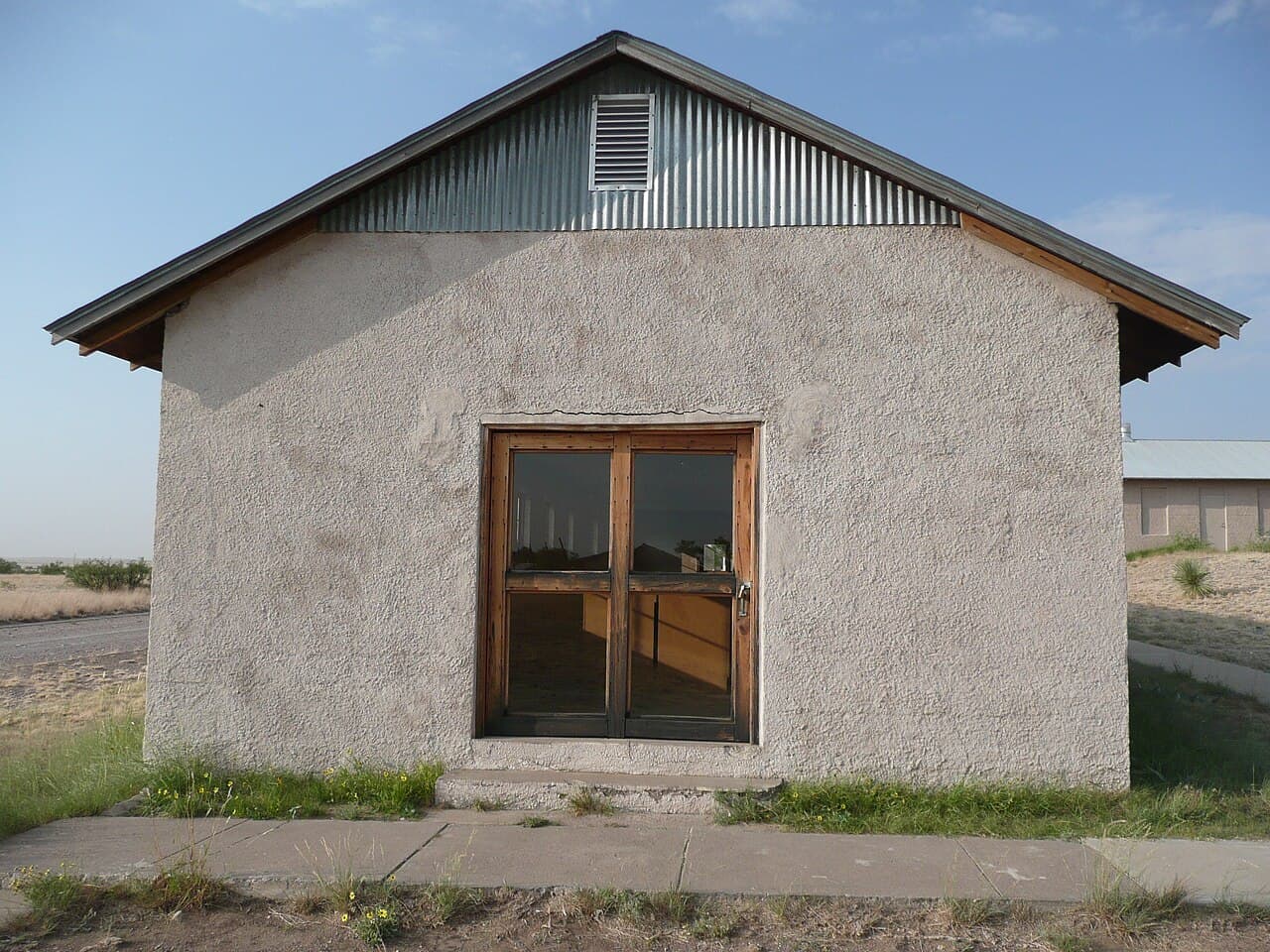
Arrive in time for a late afternoon [Chinati Foundation](/marfa/galleries/chinati-foundation) tour — Donald Judd's former military base turned permanent art installation, with 100 mill aluminum boxes in two artillery sheds, 15 outdoor concrete works, and site-specific installations by Dan Flavin, John Chamberlain, and Robert Irwin. At sunset, drive 37 miles northwest to Prada Marfa — the drive-by sculpture installed in 2005 by Elmgreen & Dragset that has become one of the most photographed artworks in the world. The next morning, tour the Judd Foundation spaces in town, visit Ballroom Marfa for whatever exhibition is currently on view, and browse Marfa Book Company — one of the best art bookstores in the state.
## Practical Tips
The total driving across five days is approximately 15 hours. The longest single drive is Day 5 (Dallas to Marfa at 5.5 hours), so plan accordingly — leave early and bring good music or podcasts. The best seasons for this trip are spring (March through April) and fall (October through November), when temperatures are comfortable across the state. Avoid August if possible — the heat in San Antonio, Austin, and especially Marfa can be brutal.
## Budget
Many of the major museums on this itinerary are free. The Menil is free. The DMA is free. Ruby City is free. The Blanton is free on Thursdays. Dallas Contemporary is free through 2026. Hotels range from approximately $100 per night in San Antonio to $300 or more in Marfa during peak season. Budget for gas, food, and the occasional museum admission — but the art itself is remarkably affordable to access.
## What to Skip
Do not try to see everything. This itinerary lists multiple options per city, but the best art experiences happen when you slow down and give yourself time to sit with what you are seeing. Pick two to three stops per city. Spend an hour in front of a single work that moves you. Have a long lunch. Let the driving time between cities be a reset, not a race. The art is not going anywhere — but your attention is finite.
## The Bottom Line
Texas has more art than most people realize — and more art cities than any other state in the American South. This road trip connects five of them in five days, moving from the institutional powerhouses of Houston and Dallas to the cultural richness of San Antonio and Austin to the desert minimalism of Marfa. Each city offers something the others do not. Together, they make the case that Texas is one of the most important art states in the country — and that the best way to understand it is to drive through it, one museum and one gallery at a time.